Baseline Ecological Data of a Shrimp Farm Slated for Restoration in Coastal South Carolina
Rene Brown
M.S. Student, Clemson University
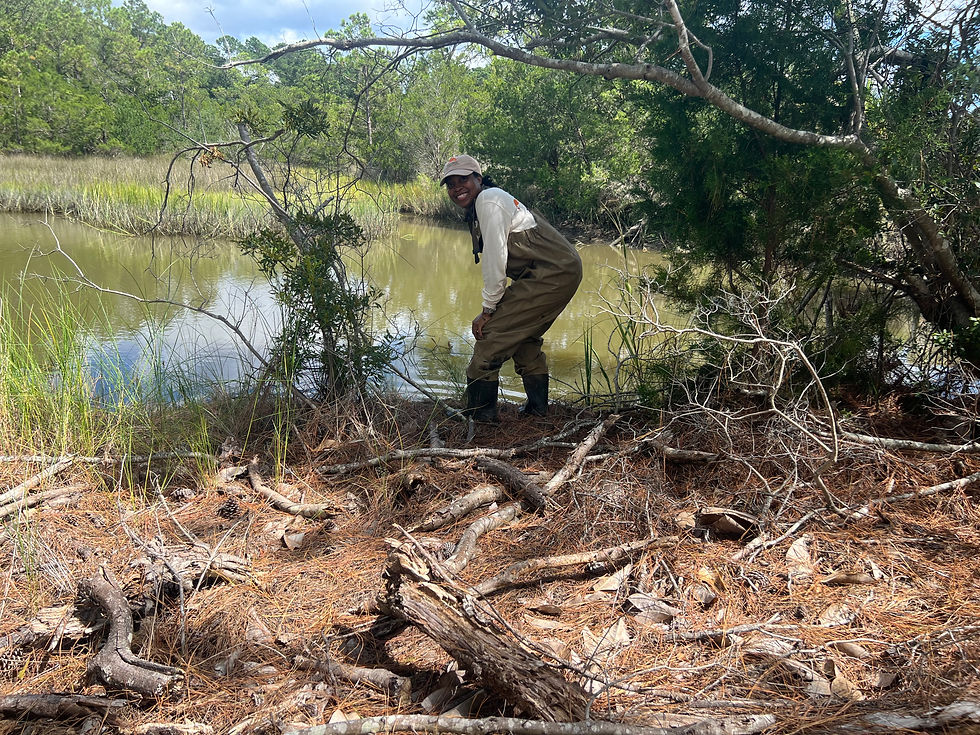


One of the most prevalent substances on Earth is water, which is made up of hydrogen and oxygen and is essential to all living things. It is the main component of the majority of living things, including people. Water availability is a major limiting factor for plant productivity in terrestrial ecosystems globally, even though it is abundant on Earth's surface. This emphasizes how vital water is to the survival of ecosystems in general and wetlands in particular.
Wetlands are ecosystems distinguished by soil, vegetation, and hydrological characteristics. These include certain soil types, plants that do well in damp environments, and the existence of standing water for a portion of the growth season. Another noteworthy quality of wetlands is their capacity to filter metals out of surface and groundwater, improving the quality of the environment. These characteristics highlight their significance as natural filtration systems that preserve water quality as well as biodiversity hotspots.
The Eastern oyster, or Crassostrea virginica, is a keystone species that offers a multitude of ecological functions and is one of the species that are essential to wetland and estuary environments. As a commercial product, oysters support coastal economies and provide food and building materials. Oysters have a significant ecological impact in addition to being economically valuable since they filter water, enhance its quality, and provide habitat for other species. Particularly in regions where anthropogenic activities have an influence, their existence increases the resilience of the ecosystem.
Plant litter decomposition in estuarine wetlands is crucial for short-term carbon storage, nutrient cycling, and coastal trophodynamics. Aquatic ecosystems depend on the decomposition of organic matter to recycle nutrients and other chemical elements, maintain vital food chains, and support primary production. Although the coastal ecosystem of Little Edisto Island is still mostly intact, problems with water quality could endanger the oyster habitats, plant communities, and fish populations. One method for developing living shorelines and stabilizing coastal systems is the restoration of native oyster populations. Oysters are essential to these habitats because they grow in unique formations like "oyster flats" along creeks and rivers or on the edges of marshes. The former shrimp farm site S-161 on Little Edisto Island offers a chance for oyster farming and wetland restoration. Impoundments will be converted into oyster beds, new buildings will be erected, and water filtration will be improved to promote oyster development at this site.
The goal of this study is to clarify the relationships between environmental variables and the condition of these essential ecosystems. The research will improve conservation and restoration methods targeted at strengthening the resilience and sustainability of these ecosystems in the face of anthropogenic and climatic stressors by gaining an understanding of the factors that affect oyster and plant populations.
The breakdown of plant litter, an essential process for the nutrient cycle and overall health of salt marsh ecosystems, is a major area of attention for this research. In an impounded salt marsh, the decomposition rates of leaf litter from Juncus roemerianus and Sporobolus virginicus are investigated in this study. The study quantifies the decomposition process and determines the environmental conditions causing these changes by tracking mass loss over time using litter bags. When compared to natural marshes, the peculiarities of impounded marshes may change the dynamics of decomposition, affecting the availability of nutrients and the general health of the ecosystem. These results will help create better management strategies to preserve the ecological balance and productivity of reclaimed salt marshes. By integrating these different aspects of wetland ecosystems, the research aims to provide insights into ecosystem functioning and restoration, contributing to the broader goals of wetland conservation.